
The model code is the starting point for finding the correct high-pressure pump record. Similar-looking codes may identify different products. Preserve every letter, digit and suffix when recording the code for a quotation or spare-part enquiry.
Read each specification with its unit
- Flow: the water quantity stated in units such as L/min or L/h.
- Pressure: distinguish the figures under bar and psi headings.
- Speed: rpm identifies the rotational speed specification.
- Power: kW and HP are different units; do not compare bare numbers without their units.
- Connections and construction: shaft, flange, ports and other requirements need model-specific confirmation.
Distinguish the pump from the complete machine
A pump catalogue rating alone does not guarantee the same result under every installed condition. The motor, drive, controls and other system components are assessed together. Matching pressure ratings therefore do not establish that two pumps are interchangeable.
When requesting a replacement or spare part for existing equipment, share the pump nameplate, exact model code and serial number where available. Do not guess missing connection dimensions when making a purchase decision; ask for technical confirmation.
Compare individual product records
Review the pump range and its technical tables. State which machine or application the pump is intended for. Installation, adjustment and operation should be assessed by competent personnel using the relevant manufacturer's instructions.
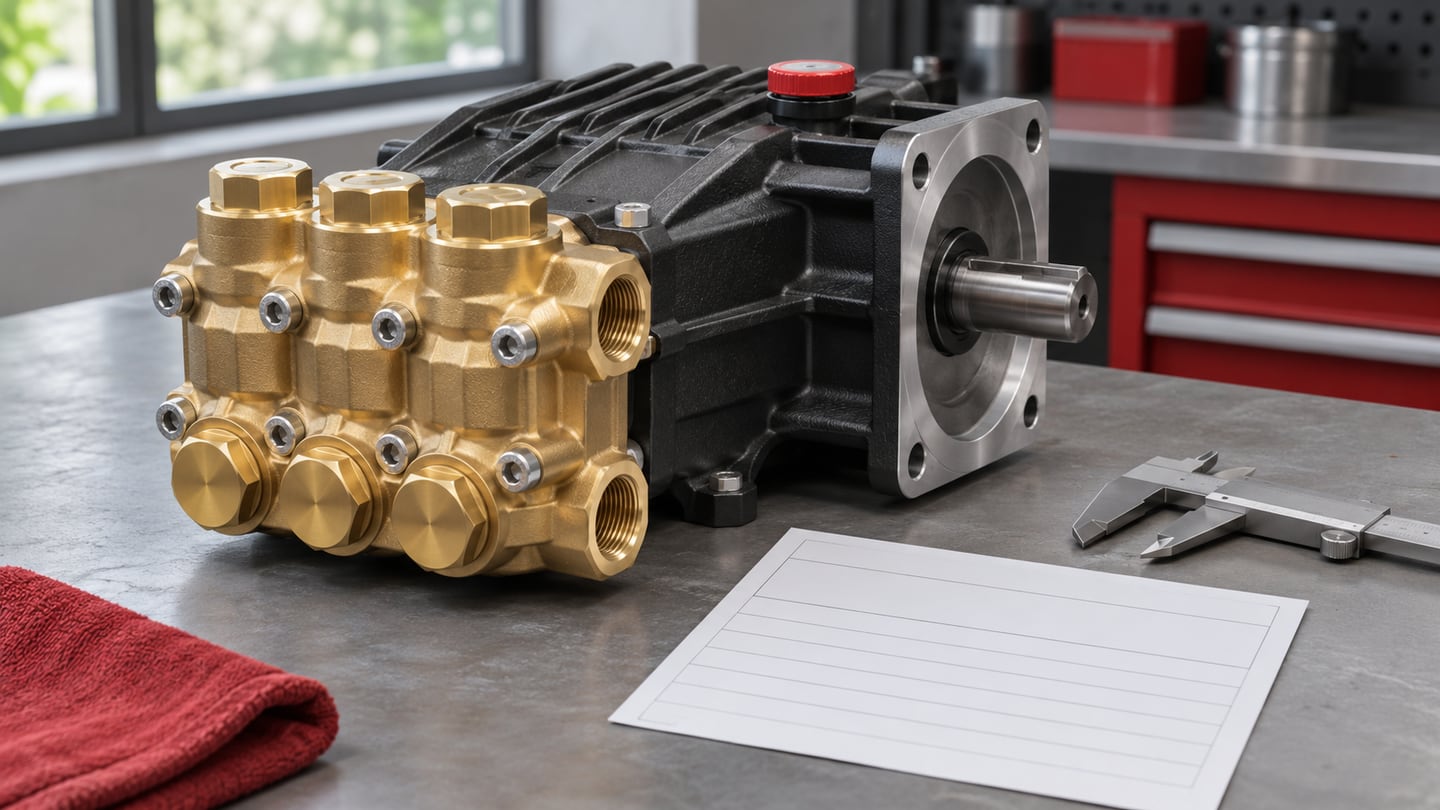
The image is an illustrative editorial visual and does not depict a specific product model.