
Pressure washer maintenance is more effective when pre-use observations, manufacturer service requirements and operating records form one consistent process. Replacing a part after a breakdown is only one element. A useful maintenance system helps the business understand how its equipment has been used and what has changed.
Several shifts may share the same machine. A change in sound noticed by one operator can become more informative when considered alongside a leak reported by another. This guide explains how equipment owners, maintenance coordinators and team leaders can organise those observations without turning routine checks into unauthorised repair work.
Scope: This is a maintenance-planning guide, not a substitute for the machine's operating and service manual. Work on pressurised circuits, electrical equipment and internal pump components belongs to trained, authorised personnel. Before inspection or maintenance, follow the specific manufacturer's shutdown, energy-isolation and pressure-release procedure.
1. Start with the identity of the equipment
Two machines that look similar can contain different pumps, motors, heating systems or controls. A lubricant approved for one unit should not automatically be used in another. Establish the exact equipment identity before assigning a service task or ordering maintenance materials.
- Machine model, serial number and internal asset reference.
- Pump and motor nameplates, plus heating-system details where applicable.
- Current operating instructions, commissioning date and service history.
- Recorded operating hours, shift pattern and the types of cleaning performed.
- Water supply, chemicals used and storage conditions.
Keep this information in a single equipment file. Photograph the nameplates clearly rather than relying only on an overall machine photograph. A complete record reduces repeated questions and helps a service team distinguish the machine assembly from its individual components.
2. A daily check does not mean dismantling the machine
The operator's role is to recognise a change from normal condition and report it. A short checklist that authorised staff actually use is more valuable than a lengthy form that remains empty. Define what operators may inspect under the manufacturer's instructions and what must be referred to maintenance personnel.
Pre-use visual checks
- Hoses and connections: Look for cuts, bulges, crushing, abrasion or obvious deformation. Do not tape a damaged high-pressure hose and continue using it.
- Cable and plug: Note visible damage or looseness. Electrical investigation and repair must be assigned to qualified personnel.
- Water supply: Confirm that the supply arrangements meet the machine's requirements. Check the maintenance record for any inlet filter or strainer that the manual permits operators to inspect.
- External surfaces: Record a new water or oil mark, its location and when it was first noticed.
- Work area: Review hose routing, drainage, access and the stable positioning of the machine.
Never use a hand to search for a pressurised leak. Apply the safe shutdown procedure before investigating a connection. A maintenance observation should not expose the person carrying it out to an avoidable hazard.
Observations during normal operation
From the safe operating position, an authorised operator may notice unusual vibration, a change in sound or unstable performance. Record the circumstances. “The gauge began fluctuating after ten minutes on the same task and settings” is more informative than “the machine is weak”. Do not overload the equipment or deliberately recreate a fault to collect better evidence.
3. Build a service schedule around the correct manual
There is no universal oil-change or seal-replacement interval for every high-pressure pump. The Cat Pumps preventive-maintenance guide identifies duty cycle, fluid, temperature and inlet conditions as factors affecting maintenance intervals. The practical lesson is to follow the requirements of the installed equipment, not copy another manufacturer's hour values.
- Obtain the manufacturer's plan: Record operating-hour and calendar requirements, inspection scope and who is permitted to perform each task.
- Add usage evidence: Use the hour meter where available. Clearly label estimated operating time if a meter is absent.
- Assign ownership: Separate operator observations, maintenance-team checks and specialist service work.
- Allow preparation time: Plan the maintenance window and required approved materials before the task becomes overdue.
- Close the record: Enter the work completed, date, operating hours, approved materials used and next required check.
For example, two machines can be the same calendar age while one performs occasional short jobs and the other operates across busy shifts. That difference is a reason to give the service team accurate usage information. It is not, by itself, permission to extend a specified maintenance interval.
4. A pressure drop is an observation, not a pump diagnosis
Reduced pressure does not prove that the pump needs replacement. The Cat Pumps troubleshooting resource discusses several possible causes, including inadequate inlet supply and conditions elsewhere in the system. An operator should document the symptom rather than experiment with replacement parts.
Record whether the symptom appears at startup or after a period of use, whether the water source or operating pattern recently changed, and any available instrument reading. Do not alter a safety valve, regulator or protective device to hide a problem. For the distinction between operating pressure and flow, see our pressure and flow guide.
A clear report also states what is unknown. If the previous service date cannot be confirmed, write “not available” rather than estimating a date that may later be treated as fact. Keeping observations separate from conclusions makes the subsequent technical investigation more reliable.
5. End-of-shift care and extended storage
Following the correct shutdown sequence, placing the equipment in suitable storage and leaving a shift note are part of maintenance discipline. Do not use a hose or cable as a lifting handle. Check that the storage environment is within the conditions permitted by the manufacturer.
Equipment left unused for a long period, or stored where freezing is possible, needs its model-specific preservation procedure. The same antifreeze, chemical or draining method is not suitable for every machine. Ask the service team for the correct process. Returning stored equipment to use should also account for the duration and conditions of storage.
6. A practical maintenance record for the workplace
A notebook or shared worksheet can be sufficient if records are consistent and unfinished work remains visible. Use the following fields as an organisational starting point:
- Identity: Asset reference, model, serial number, inspection date and person responsible.
- Usage: Meter reading or explicitly labelled estimate, with the type of work performed.
- Observation: Normal condition or change noticed, safely obtained photograph and related previous record.
- Decision: Available for use, awaiting assessment or removed from service, together with the authorised decision-maker.
- Closure: Service job reference, completed work and authorisation to return the equipment to operation.
An example is: “BM-04 / before shift / external hose deformation observed / equipment removed from use / maintenance coordinator notified.” It gives useful information without asserting an unverified diagnosis. Close the issue with a separate dated entry so the original observation remains traceable.
Frequently asked questions
Can maintenance be postponed if the machine is rarely used?
Consider both the calendar and operating-hour requirements in the manual. Low usage does not remove storage or environmental effects. Any change to the specified schedule should come from the manufacturer or an appropriate model-specific service assessment.
Is checking the oil level enough?
Level alone does not establish lubricant suitability or whether replacement is due. Follow the specified oil type, inspection method and replacement plan. Adding an arbitrary lubricant or mixing different oils is not a sound maintenance strategy.
What should accompany a service enquiry?
Provide the model and serial number, readable nameplate photographs, symptom, when it began, last maintenance information and operating conditions. Our service-enquiry preparation guide provides a complementary checklist.
Discuss your maintenance requirement with Birlik Makine
Birlik Makine provides industrial cleaning machinery sales, maintenance and spare-parts support. Contact our team with the equipment identity and service history. The appropriate work scope and any part requirements should be established after reviewing the machine's technical information.
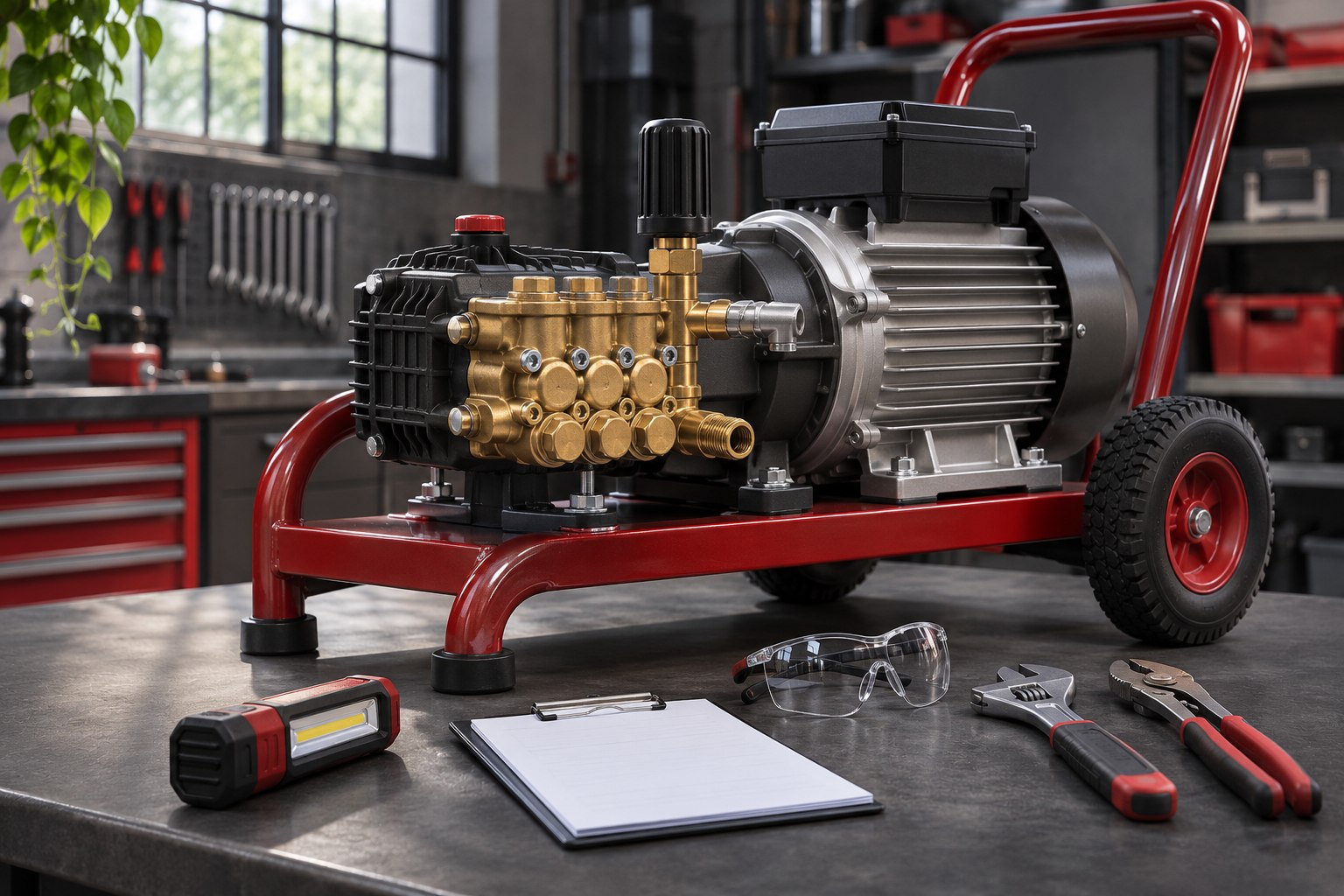
The cover is an original conceptual image created for this topic. It does not depict a specific product model or an actual company facility.