
Motor power and tank capacity are common starting points when comparing industrial vacuums. They measure different characteristics. A larger tank or a higher wattage alone does not establish which model suits a particular job.
Separate power, motor count and capacity
Motor power stated in watts is an electrical power specification. Motor count is a separate entry. Unless the record explicitly says so, do not assume whether a power figure is per motor or a total. Tank capacity, expressed in litres, describes the container volume. Where airflow and vacuum figures are available, assess them separately using their stated units.
Describe the material to be collected
- Will the task involve dry dirt, liquids or both?
- Does the workplace involve narrow passages or frequent transport?
- What jobs must the hose and floor tools perform?
- What electrical supply and working pattern are available?
Wet-and-dry capability, filter construction and suitability for particular dusts must be confirmed for the individual model. A general industrial vacuum should not be assigned a special dust class or explosive-atmosphere approval without supporting documentation. Tank capacity does not establish those capabilities.
Use the individual product record
Review the industrial vacuum range and note the model code, motor details, voltage and tank capacity together. Describe the material and workplace in your quotation enquiry. If an essential specification is not listed, request confirmation before making a purchase decision.
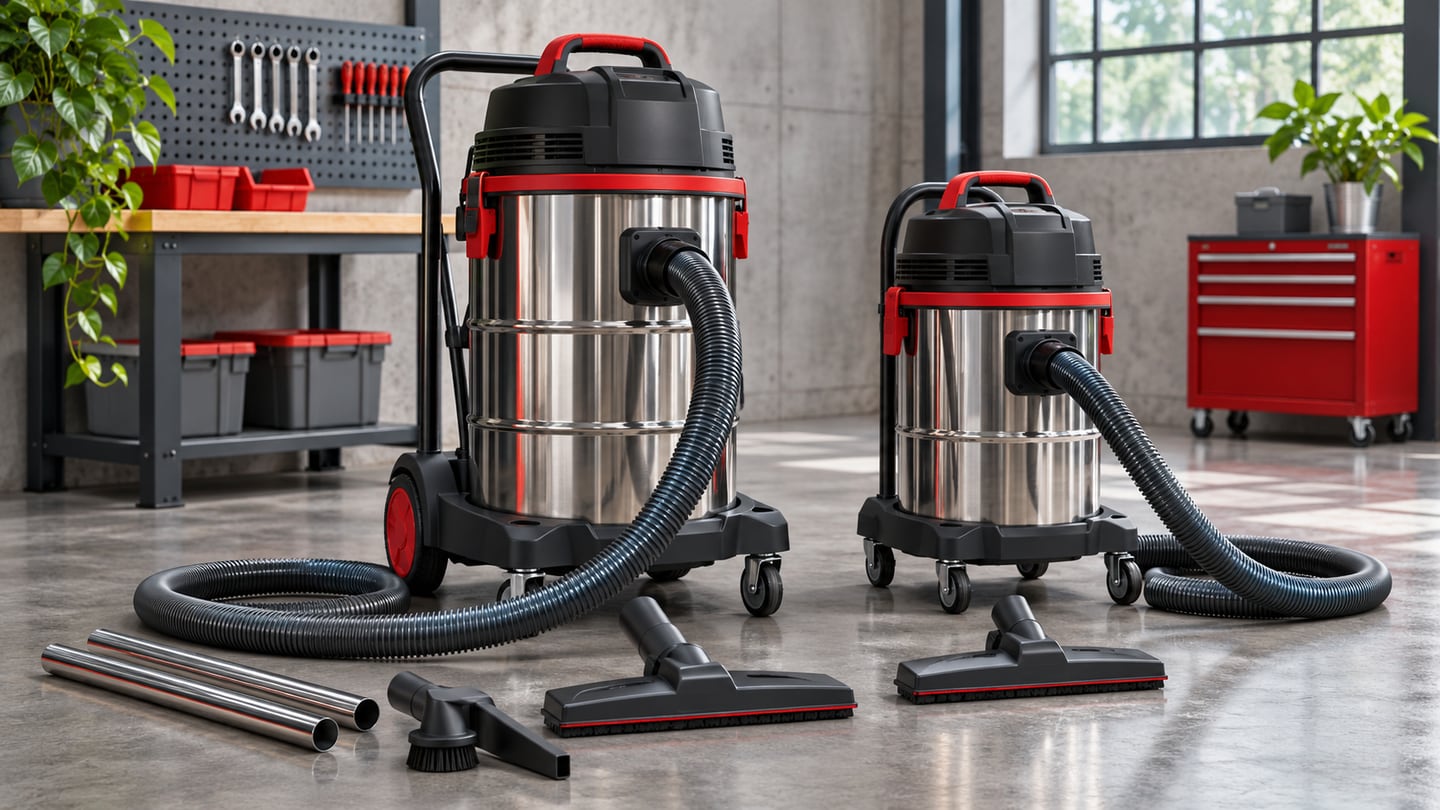
The image is an illustrative editorial visual and does not depict a specific product model.