
Reducing water consumption in industrial cleaning starts with a useful question: how many litres are required to complete an accepted cleaning job? The flow rate printed in a catalogue is only part of the answer. Pre-wetting, washing, rinsing, rework and cleaning the work area can all contribute to the total.
The objective is to remove unnecessary consumption while maintaining the required cleaning result, safe working conditions and the equipment's technical limits. This guide provides a measurement framework for teams managing vehicle wash areas, equipment cleaning and workshop operations.
1. Choose a meaningful unit of work
A monthly water bill describes total consumption but does not explain cleaning performance. A busier month may use more water overall while using less per vehicle. Group comparable jobs before selecting a reporting unit.
- Vehicle washing: Litres per vehicle within a similar vehicle class and soil level.
- Parts or equipment: Litres per item of comparable size and acceptance requirements.
- Surface cleaning: Litres per square metre for the same surface and contamination type.
- Repeated operations: Litres per cycle when the work scope remains consistent.
Count accepted jobs, not merely attempted jobs. If an item needs a second wash, that additional water belongs to the same completed result. Combining very different job sizes into one average can also obscure whether an improvement actually occurred.
2. Define the measurement boundary
Know what the meter includes. If a single meter covers wash equipment, staff facilities and irrigation, the entire change cannot be attributed to the pressure washer. The EPA's WaterSense measurement guidance describes how meters and submeters support identifying consumption areas, leaks and the results of efficiency projects.
Work with the responsible facilities or maintenance specialist when establishing a measurement arrangement. Do not add an arbitrary measuring device to a high-pressure outlet. Its suitability and installation position must be assessed for the system.
- Document the measured line and any other consumers connected to it.
- Record starting and finishing readings with date and time.
- Count completed, accepted jobs within that period.
- State whether pre-washing, rinsing and work-area cleaning are included.
- Note interruptions, rework and unusual jobs during the measurement window.
Keep the boundary consistent when comparing two periods. A lower reading obtained by moving a cleaning stage to another unmetered line is not evidence that the complete process uses less water.
3. Understand flow rate and total volume
Flow rate expresses the amount of water passing in a unit of time. Total volume also depends on how long that flow continues. A nominal catalogue figure is not a measured result for every task, and should not be turned directly into a guaranteed saving.
Simplified calculation: Water volume in litres = average actual flow in litres/minute × water-flow time in minutes.
For illustration only, assume an average flow of 12 litres/minute and 18 minutes of active water use. That stage uses 216 litres. A process producing the same accepted result in 15 minutes uses 180 litres. The difference is 36 litres, approximately 16.7% in this example. These numbers are not a Birlik Makine product test or a savings commitment. Other consumption stages still need to be added.
Time spent in the wash area is not necessarily the same as time with water flowing. Preparation, movement and inspection may have different consumption patterns depending on the equipment. Appropriately metered totals provide a stronger comparison than assumptions about the full working period.
4. Does lower flow always mean less water per job?
No. If a lower flow makes the operation substantially longer or creates rework, total consumption can increase. A hypothetical process using 10 litres/minute for 25 minutes consumes 250 litres; one using 12 litres/minute for 18 minutes consumes 216 litres. This does not mean higher flow is always preferable. It means the decision should compare equivalent accepted results under controlled conditions.
Pressure and flow are separate variables. Selecting equipment solely to reduce its nominal water flow may overlook the actual cleaning requirement. Our pressure and flow guide explains the distinction.
5. Locate unnecessary consumption in the process
Preparation and repeat cleaning
Where the surface and workplace safety procedure permit it, consider collecting loose solid contamination with an appropriate method before washing. Do not automatically substitute dry sweeping where hazardous dust or residues are present. The site's approved cleaning procedure should determine the method. The purpose is to avoid loading the wash stage with material that can appropriately be removed beforehand.
Define what a completed job looks like. Unnecessary extra washing and insufficient cleaning followed by rework can coexist in the same operation. A reference photograph or surface-specific acceptance checklist can help teams make consistent decisions about when the required result has been achieved.
Waiting periods and leaks
Organise the workflow around the equipment's permitted stopping and standby procedure. Use the manufacturer's controls and preserve protective functions. Never disable a protection system in pursuit of lower water use. A leak in a pressure hose or connection should be reported and handled through safe shutdown and maintenance, not repaired on a running system.
Cleaning chemistry, temperature and method
Where a chemical is approved, follow its application, dosage, contact-time and rinsing instructions. More chemical does not automatically mean less water is needed. Temperature and method should also suit the surface and equipment. See our hot and cold pressure washing guide for the selection questions.
6. Reclaimed water requires its own technical assessment
Sending dirty wash water directly into a machine is not an appropriate efficiency measure. The EPA's vehicle-wash guidance explains that treatment requirements depend on the intended reuse stage. This does not establish that any particular pressure washer can accept reclaimed water.
Water quality, suspended particles, chemical content, pump requirements, storage and maintenance must be assessed together. Describe the available water source when discussing equipment with Birlik Makine. Do not assume compatibility with recovered water without confirmation for the specific model and installation.
7. A practical measurement and improvement plan
The following four phases are an organisational proposal that you can schedule around your operation. They are not mandatory maintenance intervals or a regulatory timetable.
- Establish a baseline: Record water, accepted output, time, rework and quality for representative jobs.
- Change one factor: Select an improvement approved by the business. Avoid changing several equipment settings and work practices simultaneously.
- Compare equivalent work: Use the same measurement boundary and similar workload. Record differences in soil level or staffing.
- Continue monitoring: Track litres per job alongside time per job and rework. A loss of quality should not be reported as a successful efficiency improvement.
A useful form includes date, job type, starting meter reading, finishing reading, accepted quantity, rework, operating time, process change and reviewer. Add a short explanation for unusual results so the next person does not mistake an exceptional day for normal performance.
Frequently asked questions
Can I save water by restricting the machine's inlet?
Reducing the required water supply is not a sound efficiency strategy. Maintain the manufacturer's inlet conditions and assess improvements through measured workflow and approved operating settings.
Is a lower bill sufficient evidence?
No. Work volume and other water users can change. Compare litres per accepted job within the same scope, together with the cleaning result.
Can a saving percentage be promised in advance?
A credible percentage requires a baseline and a comparable trial. Without site data, a specific savings promise would be unreliable.
Discuss equipment using measured information
When contacting Birlik Makine, describe the surface, contamination, job volume, water source and any available consumption records. Use our contact page to send your sales or technical enquiry. These details help the team assess equipment options against the actual requirement.
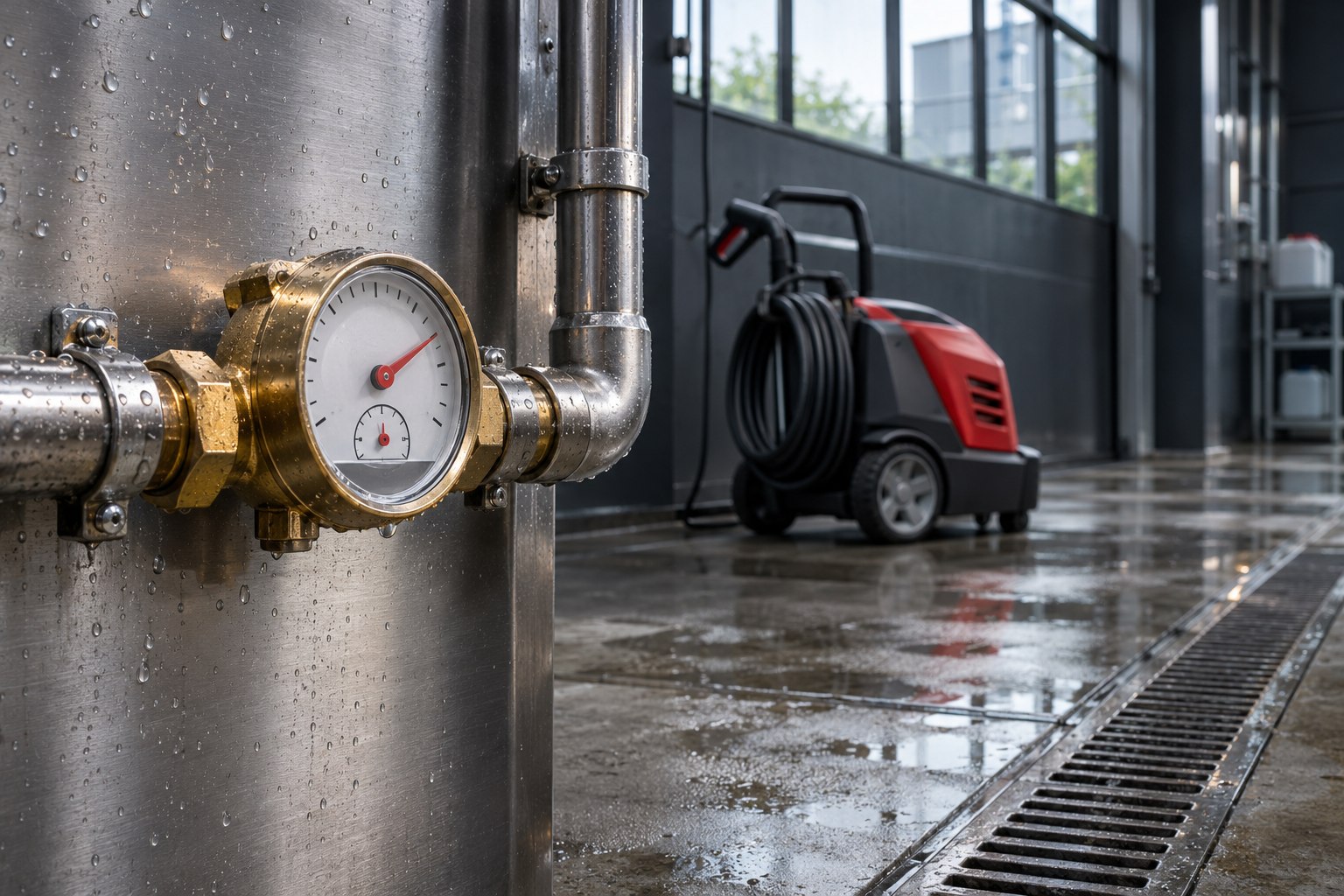
The cover is an original conceptual image about water management. It is not a technical drawing of a specific product or a photograph of an actual company facility.